Adjustable slats
Tilt lets you redirect light and views without fully raising the treatment.
Familiar control
Horizontal or vertical slats that tilt for adjustable light, privacy, and view.
Understand the category
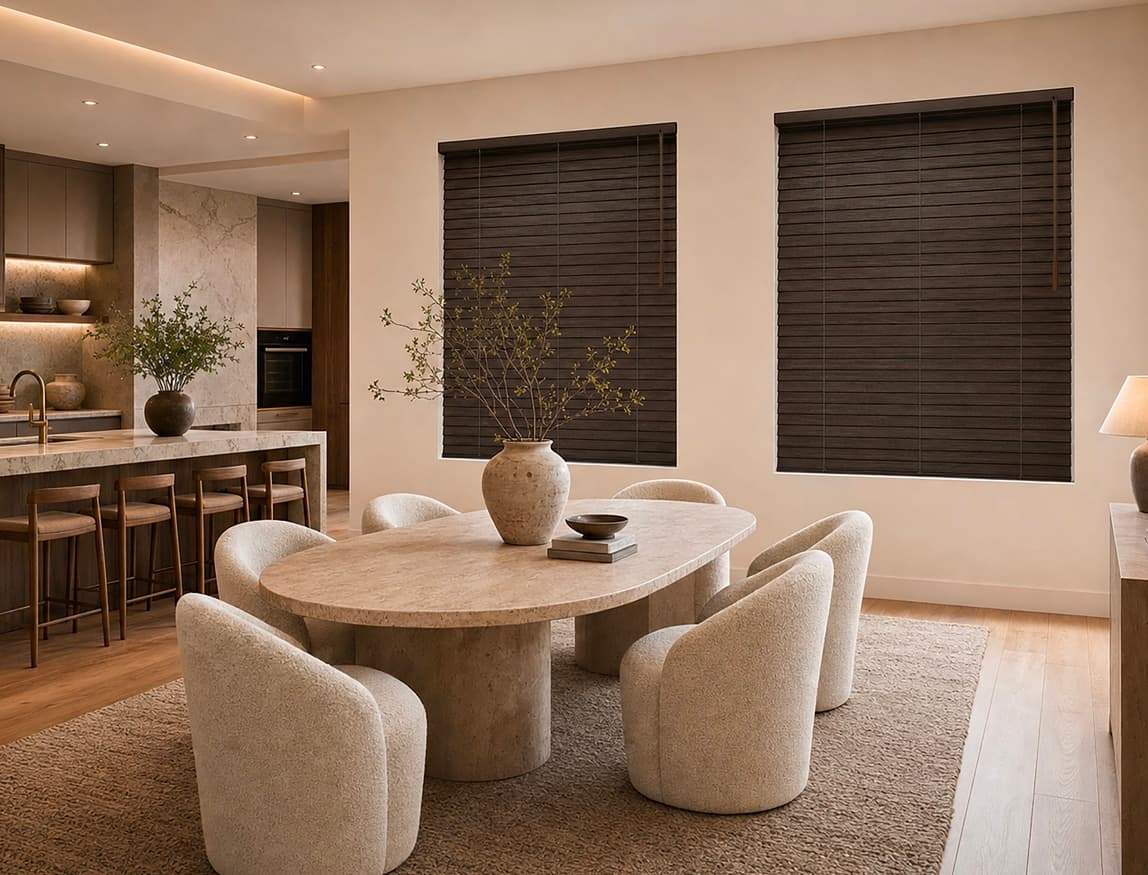
Blinds remain a practical choice when precise tilt control and a familiar architectural rhythm suit the room. Material, slat proportion, finish, lift system, and opening type all matter to how the finished treatment performs and looks.
Choose blinds over shutters when you want adjustable slats with a lighter visual and investment footprint. Choose a fabric shade when softness or a broader field of color is preferred.
The practical strengths
Tilt lets you redirect light and views without fully raising the treatment.
Wood, alternative materials, and metal constructions address different rooms, appearance goals, and budgets.
Straightforward operation and a recognizable profile make blinds easy to understand and live with.
Where it works well
These are useful starting points, not stock prescriptions. The room, glass, access, and daily routine determine the final recommendation.
Adjustable slats provide familiar, incremental control where light and privacy change throughout the day.
Tilt can redirect glare while retaining some daylight, though reflections and monitor position still need to be considered.
A consistent blind can cover many standard openings while finishes and slat proportions adapt to the room.
Specialty horizontal or vertical concepts may apply, but access, stack, wind from moving doors, and daily traffic should guide the recommendation.
Meaningful choices
Exact availability varies by manufacturer, collection, dimensions, and application. NBWC uses these decision areas to narrow the current, buildable choices.
Natural grain and stain depth create a warm furniture-like finish. Weight, humidity, and exposure influence where real wood makes sense.
These options can provide a wood-like profile with different moisture, weight, maintenance, and value characteristics.
A slimmer, more technical slat can suit compact depths, practical spaces, or a deliberately minimal appearance.
Wider slats reduce the number of horizontal lines and can open the view; narrower slats create a denser rhythm and may suit shallower openings.
Current safety-compliant controls, valances, ladder tapes, and finish options vary by product. The complete control layout should be reviewed, not assumed.
How it works
Slats tilt as a group and can typically be raised or traversed, depending on horizontal or vertical construction.
Control arrangements vary by product and current safety requirements. The opening, size, and selected material guide the appropriate system.
Light, privacy & comfort
Tilting slats changes view and privacy in small increments. Light gaps are inherent to the construction, so expectations should be aligned before selection.
Slat size, material, grain, color, decorative tapes, valance, and hardware determine whether blinds feel traditional, tailored, or minimal.
Measured for the real opening
Correct depth, bracket placement, stacking room, and clearance from handles and trim support smooth operation and a balanced fit.
Set the right expectations
Even when closed, rout holes, overlaps, edges, and headrail conditions allow some light. A room-darkening shade may be better where darkness is the priority.
Width, material, and slat size affect lift effort, headrail needs, and long-term alignment. Multiple blinds may be preferable across broad windows.
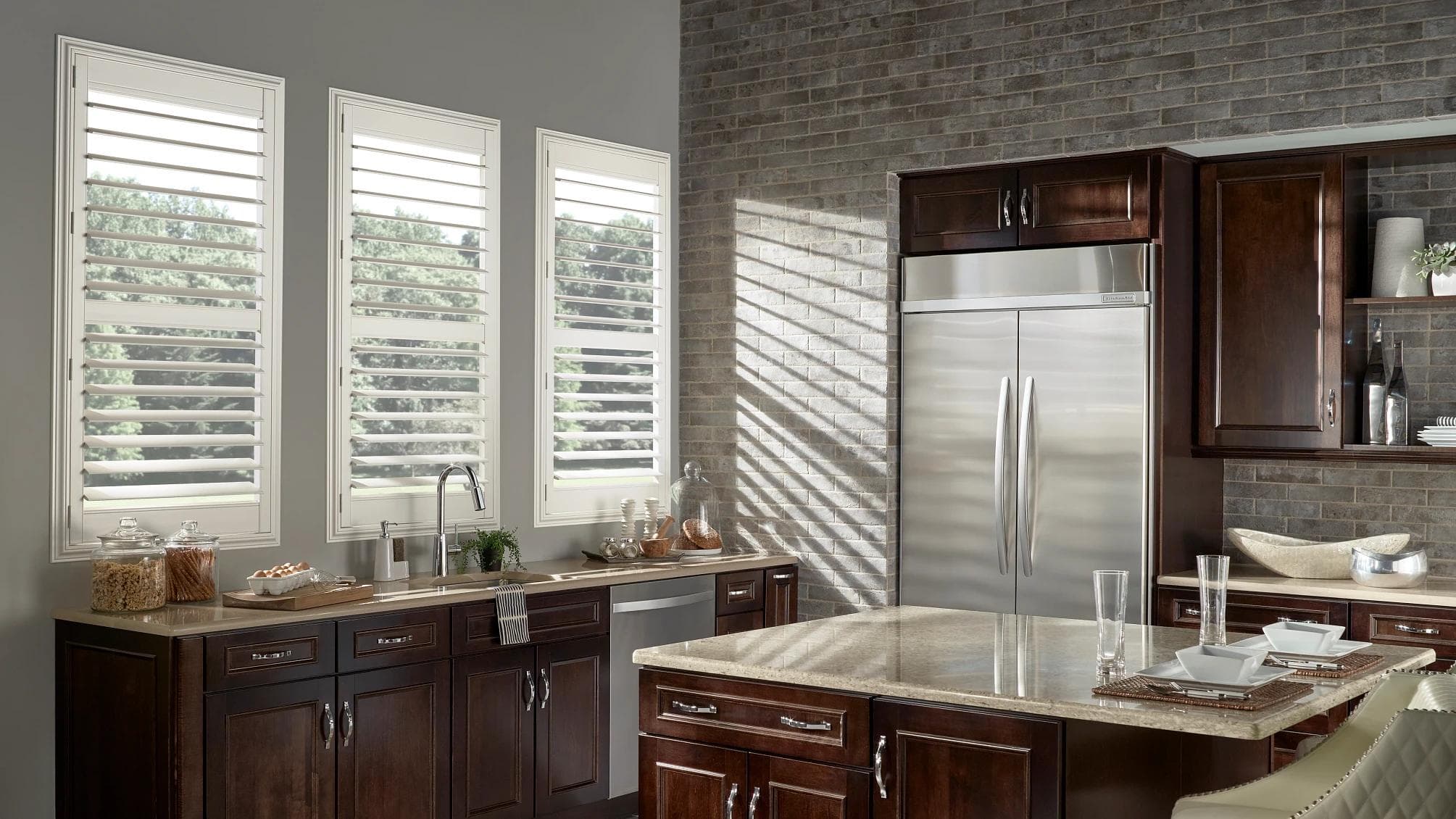
Blinds lift clear and are generally lighter visually; shutters use framed panels and become a stronger architectural element.
Your consultation checklist
Questions homeowners ask
Choose based on room conditions, desired finish, weight, dimensions, maintenance, and budget. Real wood emphasizes grain and warmth; alternative materials can be practical where moisture or value leads.
They provide adjustable privacy and light control but have inherent gaps. A room-darkening roller or cellular solution usually sets a clearer darkness expectation.
More interior options
Made for your home
See materials in your own light, compare practical options, and get a recommendation built around the way you live.