Material depth
Variations in reeds, grasses, and fibers create visual dimension that flat fabrics do not.
Natural texture
Reeds, grasses, fibers, and woven materials that bring warmth and dimensional texture to a room.
Understand the category
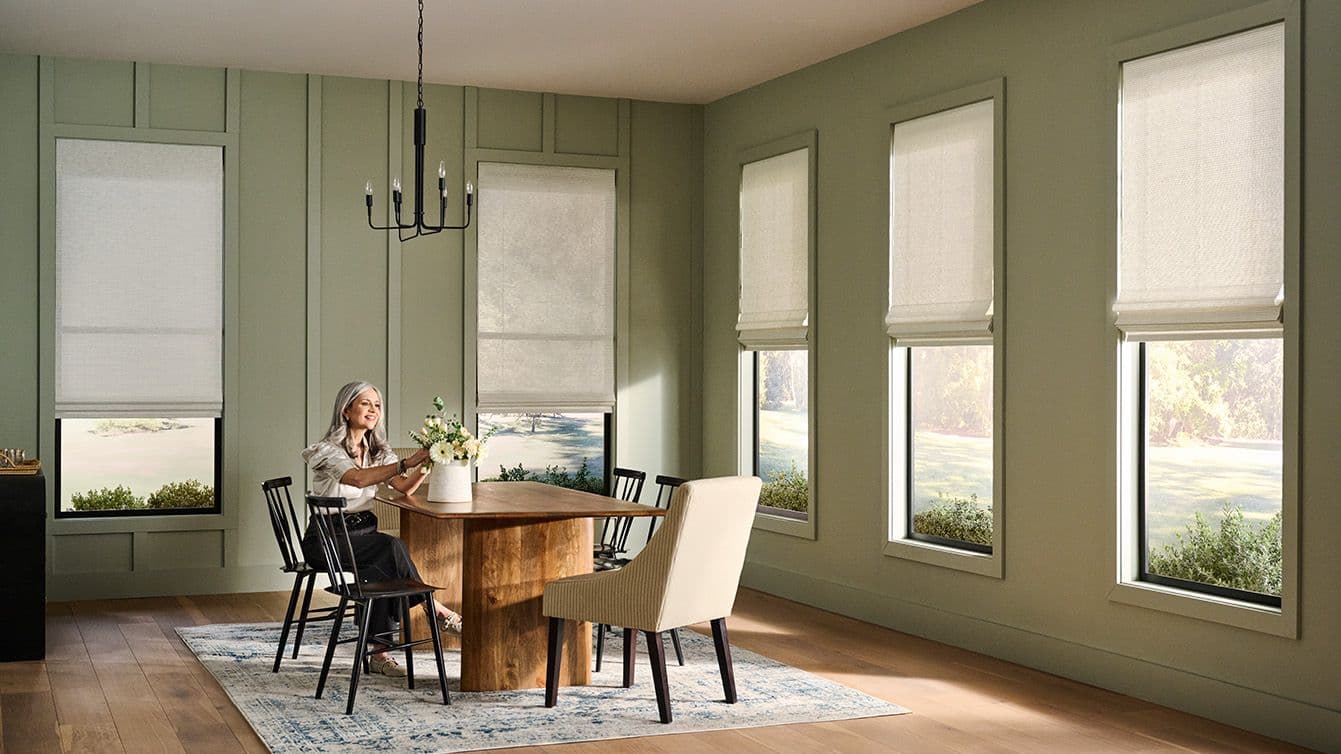
Woven wood shades make the material itself part of the design. Natural variation, weave openness, edge treatment, and lining determine whether the result feels airy and organic or more private and tailored.
Choose woven woods over Roman shades when natural material variation and texture are the defining goal rather than a conventional textile look.
The practical strengths
Variations in reeds, grasses, and fibers create visual dimension that flat fabrics do not.
Open weaves feel relaxed and luminous; tighter weaves and liners provide more coverage.
Edge binding, valances, liners, and control details let the treatment feel casual or tailored.
Where it works well
These are useful starting points, not stock prescriptions. The room, glass, access, and daily routine determine the final recommendation.
Natural texture adds depth and warmth without requiring a bold pattern.
A woven treatment can soften hard surfaces, provided the selected material and placement suit the room conditions.
A privacy or room-darkening liner can make an organic-looking shade more practical for sleep and street-facing exposure.
Woven shades pair naturally with side panels when both texture and stronger edge coverage are desired.
Meaningful choices
Exact availability varies by manufacturer, collection, dimensions, and application. NBWC uses these decision areas to narrow the current, buildable choices.
Open weaves glow and preserve more visual texture; denser weaves provide more screening before a liner is added.
A liner changes privacy and light while also changing how clearly the natural weave is seen from inside and outside.
Reeds, grasses, woods, and blended fibers differ in scale, irregularity, color movement, and weight. Samples should be judged as natural materials, not printed replicas.
Binding, valance treatment, hem detail, and hardware finish can make the same weave feel relaxed or more tailored.
Control choices depend on material weight, construction, size, and the current collection; not every weave supports every operating system.
How it works
The woven panel lifts into folds or rolls according to the selected construction. Natural materials can show expected variation in color and texture.
Available controls vary by collection. The weight and construction of the selected material influence the right operating system.
Light, privacy & comfort
Unlined open weaves can glow beautifully but may not provide full privacy. Privacy or room-darkening liners can change both performance and appearance.
Weave scale, fiber color, edge treatment, liner, and surrounding materials should be reviewed together. Skandia is an important source for this category, with other manufacturer options considered as appropriate.
Measured for the real opening
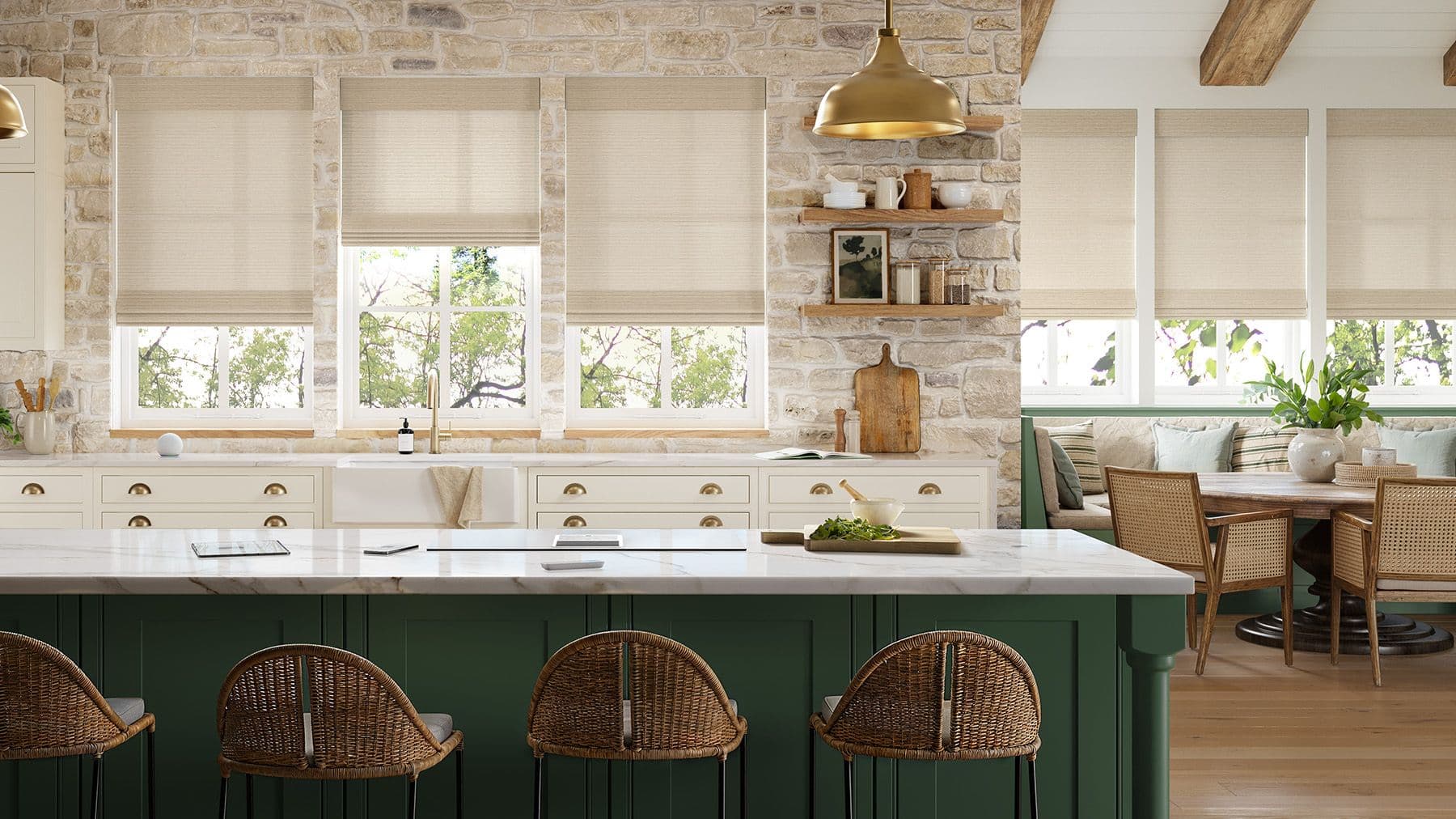
Measurement and mounting decisions affect side coverage, pattern alignment, stack, and how a liner sits behind the natural weave.
Set the right expectations
Natural fibers can vary in color, thickness, spacing, and texture. That character is desirable, but it should not be mistaken for a perfectly uniform fabric.
The luminous quality homeowners like during the day may allow silhouettes or views, especially at night, unless a suitable liner is selected.
More coverage can mute the weave's transparency and change the street-side appearance. The performance and look should be chosen together.
Your consultation checklist
Questions homeowners ask
Collections may combine woods, reeds, grasses, and other natural or blended fibers. The exact composition and performance vary by current material.
Dense weaves provide more screening than open ones, but many projects need a privacy or room-darkening liner for dependable nighttime coverage.
More interior options
Made for your home
See materials in your own light, compare practical options, and get a recommendation built around the way you live.