Glare management
Screen fabrics can reduce harsh brightness while maintaining a connection to the outdoors.
Glare and view management
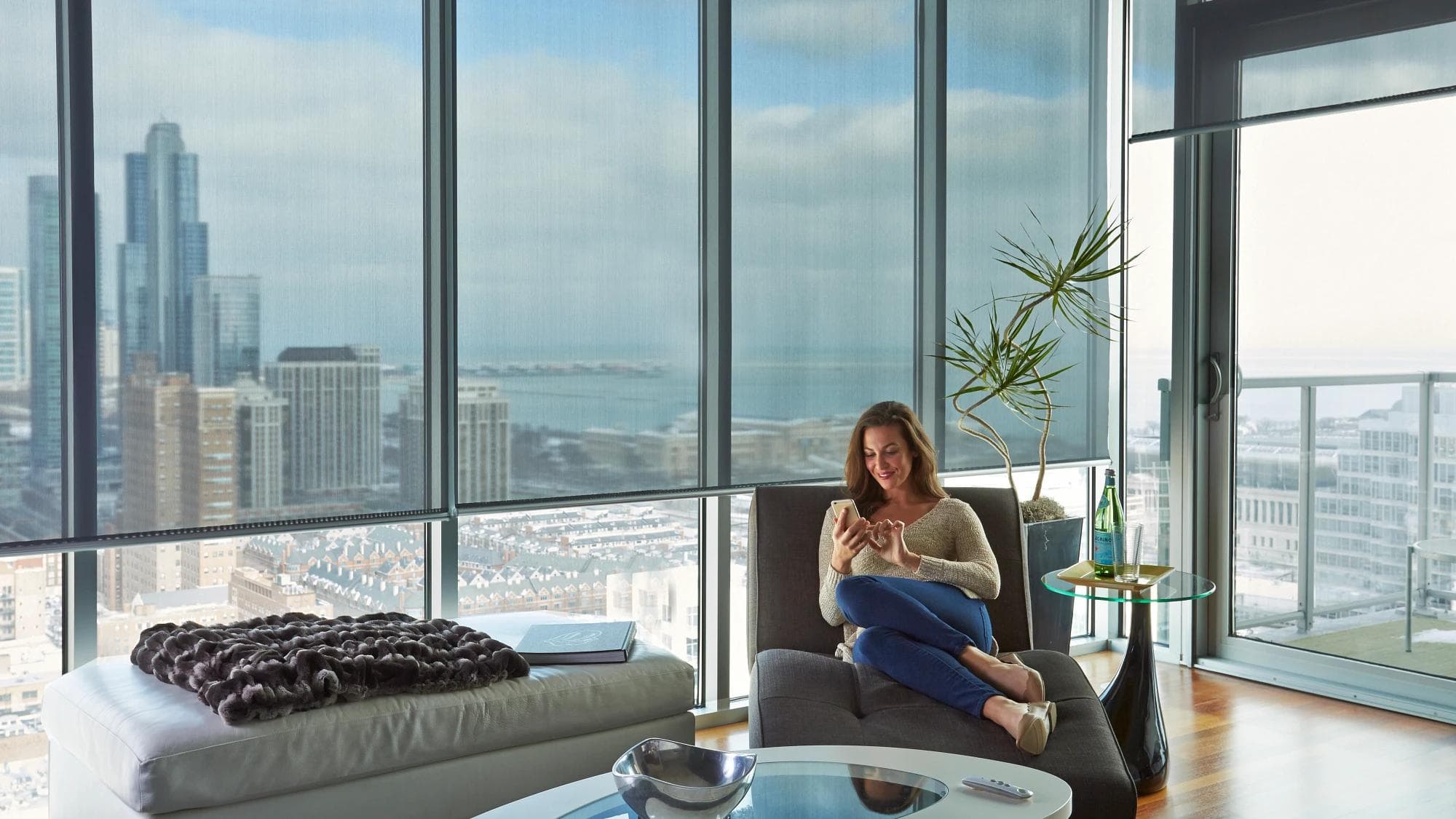
Technical screen fabrics designed to manage glare and daylight while preserving a degree of outward view.
Understand the category
Solar shades are a specialized form of roller shade. Their screen-like fabrics are selected to balance glare, daytime view-through, UV exposure, privacy expectations, and the visual character of the room.
Choose solar shades instead of a privacy roller fabric when glare and daytime view-through matter. Choose a more opaque treatment when nighttime privacy is the first priority.
The practical strengths
Screen fabrics can reduce harsh brightness while maintaining a connection to the outdoors.
Openness and color influence how clearly the exterior remains visible during daylight.
Their simple format can suit wide expanses when product limits and mounting conditions support the plan.
Where it works well
These are useful starting points, not stock prescriptions. The room, glass, access, and daily routine determine the final recommendation.
Screen fabric can reduce harsh brightness while preserving a daytime connection to the outdoors.
Solar shades can manage screen glare without making a workspace feel completely closed off.
Window orientation and time of day guide fabric selection where intense sun and heat are recurring concerns.
A simple roller format can coordinate broad glass areas, with motorization useful for consistent daily adjustment.
Meaningful choices
Exact availability varies by manufacturer, collection, dimensions, and application. NBWC uses these decision areas to narrow the current, buildable choices.
More open weaves preserve more view and transmit more light; tighter weaves provide more screening. The right balance depends on orientation, distance, and the room's purpose.
Darker fabrics often support a clearer outward view; lighter fabrics can feel softer and reflect more visible light. Samples should be viewed against the real glass.
Because nighttime view-through can reverse, bedrooms and street-facing rooms may need a secondary privacy treatment or a different fabric strategy.
Exposed rolls, fascias, cassettes, manual controls, and motorization follow the same planning principles as other roller shades.
How it works
A woven screen fabric rolls onto a tube like a roller shade. The fabric's openness and color strongly influence glare, view, and appearance.
Manual or motorized operation may be available. Motorization can be especially useful where several large shades need frequent adjustment.
Light, privacy & comfort
Solar shades are primarily daylight and glare tools, not automatic nighttime-privacy solutions. Interior lighting can reverse view-through after dark, so privacy requirements must be discussed explicitly.
Darker screens often support clearer daytime views, while lighter screens can feel softer in the room. The actual choice should be evaluated with samples in the home's light.
Measured for the real opening
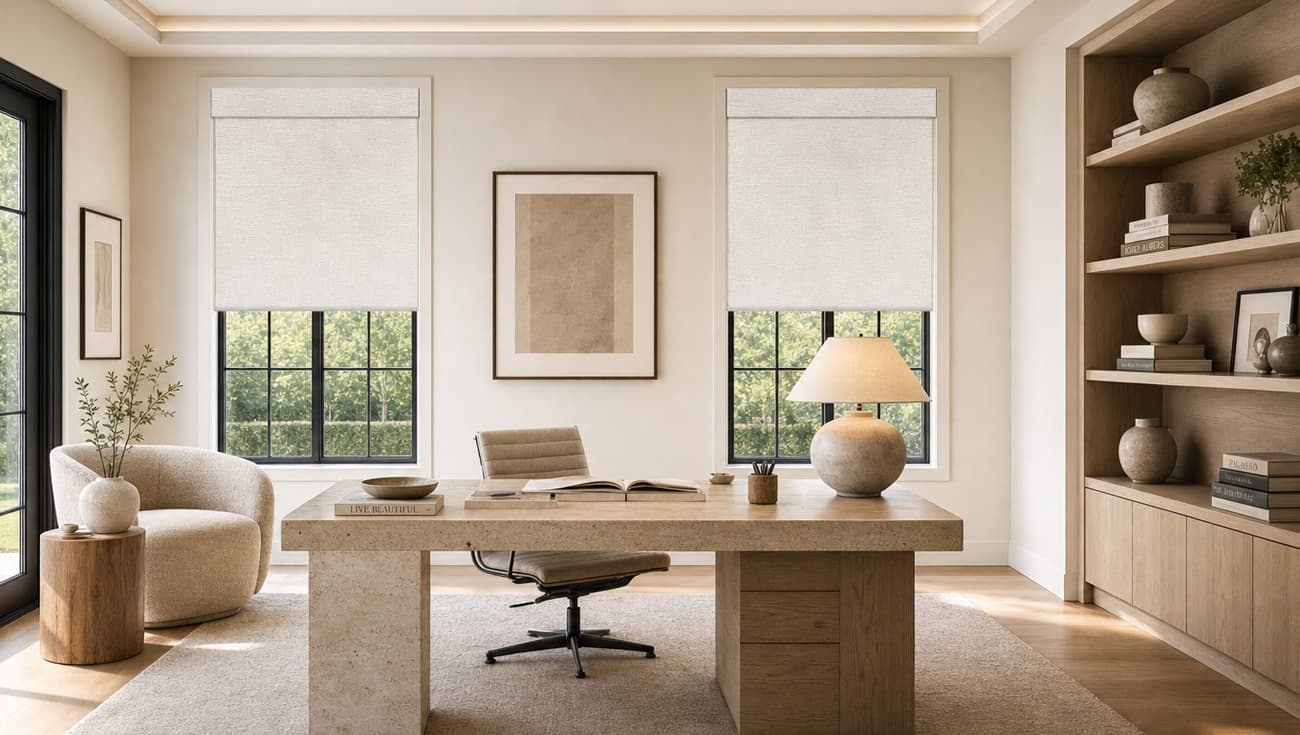
Coverage, gaps, window orientation, mounting depth, and nearby screens or reflective glass all affect the result and should be evaluated on site.
Set the right expectations
When the room is brighter than outdoors, people outside may see through the screen. Solar shades should not be sold as automatic nighttime privacy.
A tighter screen generally controls more light but reduces view. The consultation should establish which outcome matters most at the difficult time of day.
Tint, reflectivity, overhangs, insect screens, and nearby surfaces can change the result compared with a showroom sample.
Your consultation checklist
Questions homeowners ask
Often, yes, when interior lights are on and it is darker outside. If nighttime privacy matters, NBWC will discuss a secondary treatment or a more opaque solution.
It uses the same basic rolling format, but the screen fabric is selected specifically around glare, openness, and daytime view rather than decorative opacity alone.
More interior options
Made for your home
See materials in your own light, compare practical options, and get a recommendation built around the way you live.