Comfort-conscious
The cellular structure creates an insulating air space at the glass; exact performance varies by fabric and construction.
Soft structure
A streamlined fabric shade with insulating cellular construction and flexible privacy options.
Understand the category
Cellular shades use folded fabric cells to create a clean profile at the window. Their combination of softness, compact stacking, privacy choices, and insulating structure makes them a versatile starting point for bedrooms, living areas, nurseries, and whole-home projects.
Choose cellular shades over a flatter roller shade when insulating structure, a softer pleated texture, or flexible top-down privacy is a priority.
The practical strengths
The cellular structure creates an insulating air space at the glass; exact performance varies by fabric and construction.
Available configurations can preserve privacy while admitting light, depending on the selected product.
The fabric stack is visually restrained and works with many interior styles.
Where it works well
These are useful starting points, not stock prescriptions. The room, glass, access, and daily routine determine the final recommendation.
Room-darkening fabrics and optional edge-light strategies can improve sleep conditions while keeping the treatment visually soft.
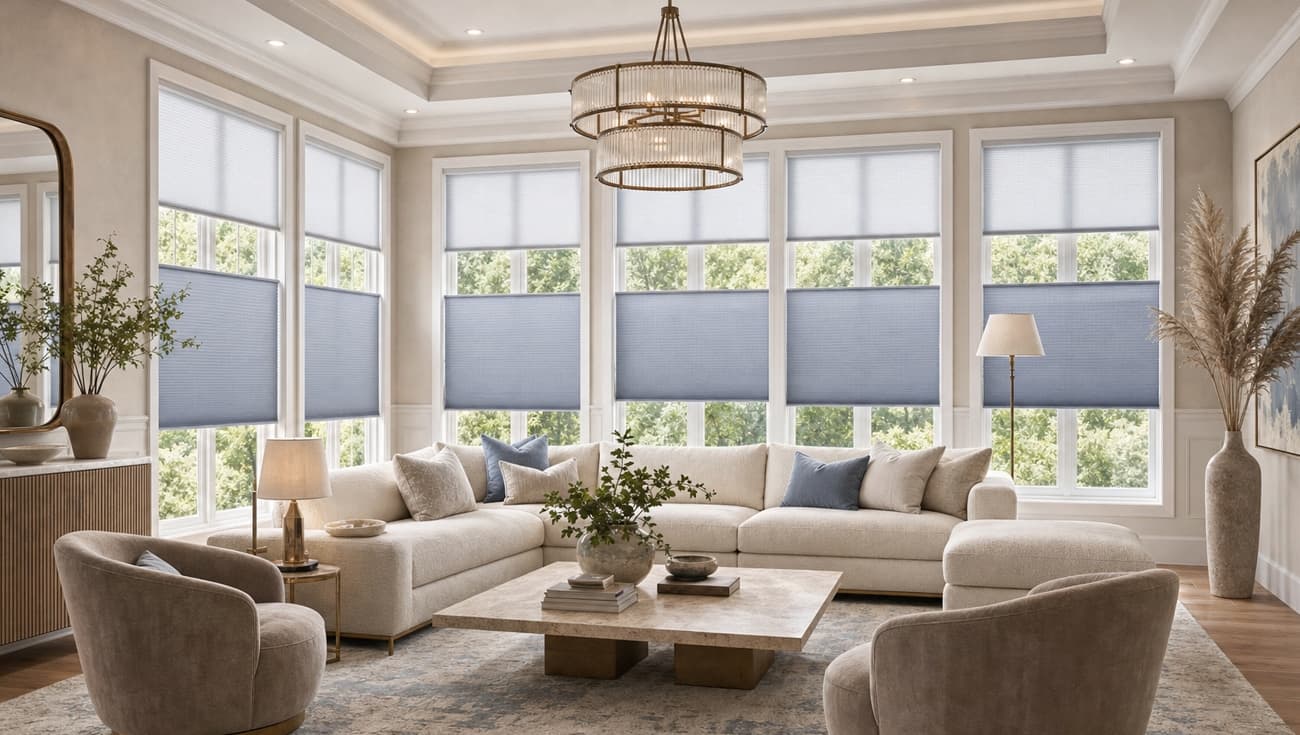
Top-down/bottom-up operation can preserve lower-window privacy while admitting daylight above, where the selected system supports it.
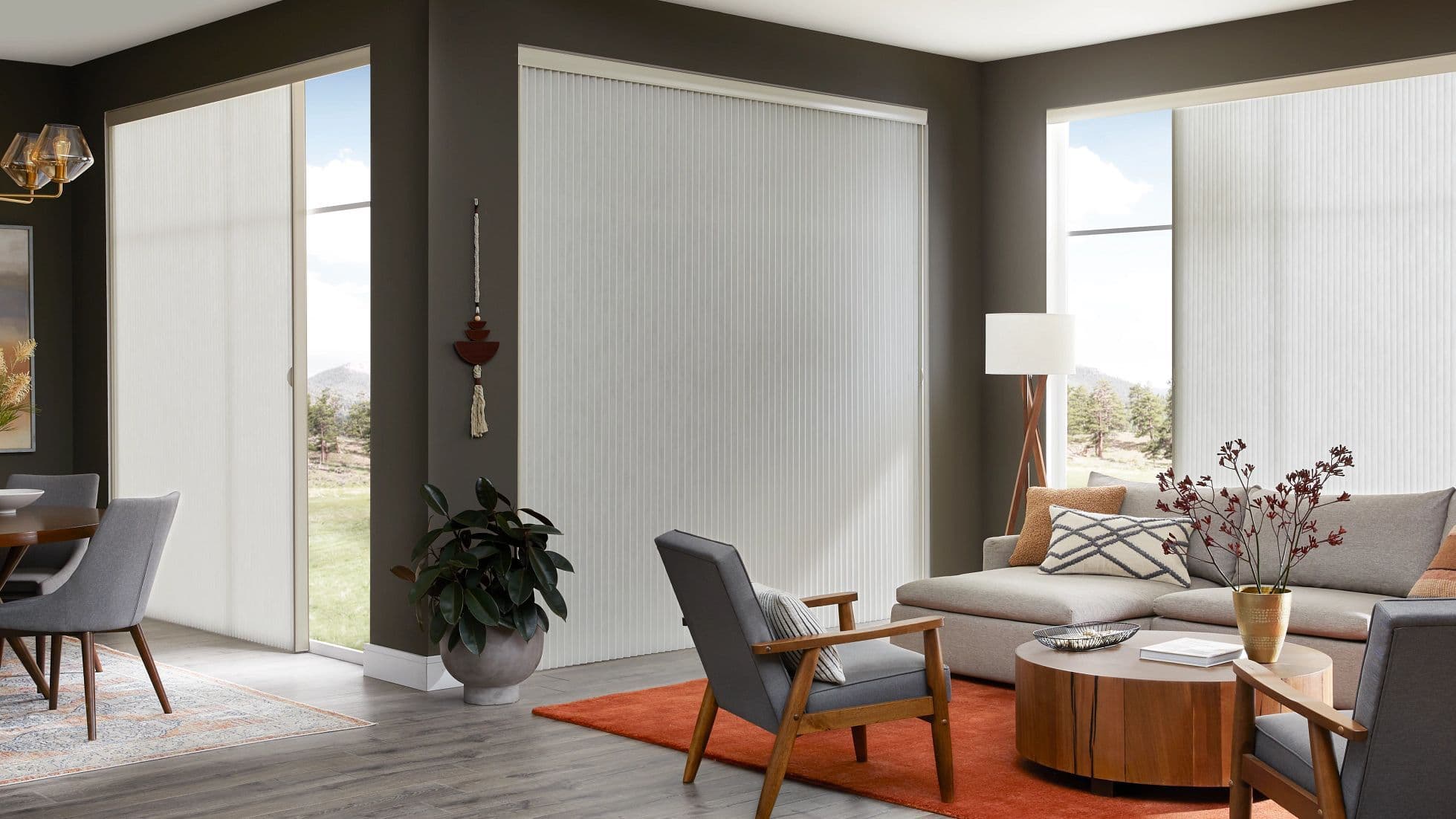
Vertical cellular constructions can cover some doors and wide openings with a compact stack; exact size and fabric availability must be confirmed.
Guided or tensioned specialty systems may suit sloped or hard-to-reach glass when a standard free-hanging shade will not.
Meaningful choices
Exact availability varies by manufacturer, collection, dimensions, and application. NBWC uses these decision areas to narrow the current, buildable choices.
Cell depth and the number of fabric layers change the shade's profile, stack, light behavior, and insulating structure. More is not automatically better for every opening.
Light-filtering fabric softens daylight and increases privacy; room-darkening fabric blocks substantially more light, though edge gaps still matter.
The shade can expose glass at the top while covering the lower portion. This is useful where daylight and eye-level privacy compete.
Some systems pair two fabrics in one opening so the homeowner can switch between a lighter daytime layer and greater nighttime coverage.
Cordless lift keeps the profile simple. Motorization is useful for repeated daily adjustments, groups of windows, or locations that are difficult to reach.
How it works
Pleated fabric forms horizontal cells that compress as the shade rises and expand as it lowers. Cell size, fabric, and construction vary by product.
Depending on the selected line, options may include cordless, top-down/bottom-up, specialty configurations, and motorized control. Availability is verified for the actual opening.
Light, privacy & comfort
Light-filtering fabrics soften daylight while room-darkening choices provide greater coverage. Top-down/bottom-up configurations may allow light above while keeping the lower portion covered.
Color, texture, cell size, rail finish, and opacity determine whether the shade recedes quietly or becomes a considered design element.
Measured for the real opening
Accurate depth and width measurements matter for a consistent reveal, clean stacking, smooth operation, and proper clearance from handles and trim.
Set the right expectations
Even room-darkening fabric does not guarantee complete darkness. Mounting method, side gaps, sill, and optional channels affect the result.
Cell size and fabric color affect how quiet or pronounced the horizontal rhythm feels, especially across large groups of windows.
Top-down, vertical, skylight, and motorized configurations may not share every fabric or size option in a standard collection.
Your consultation checklist
Questions homeowners ask
The terms are commonly used interchangeably. Both describe folded fabric cells that create air pockets at the glass.
It can greatly reduce light through the fabric, but light may remain at the edges. Mounting position, window construction, and optional side-channel solutions determine how dark the room can become.
More interior options
Made for your home
See materials in your own light, compare practical options, and get a recommendation built around the way you live.