Soft daylight
Sheer layers can diffuse brightness and reduce the hard visual contrast of an uncovered window.
Light with dimension
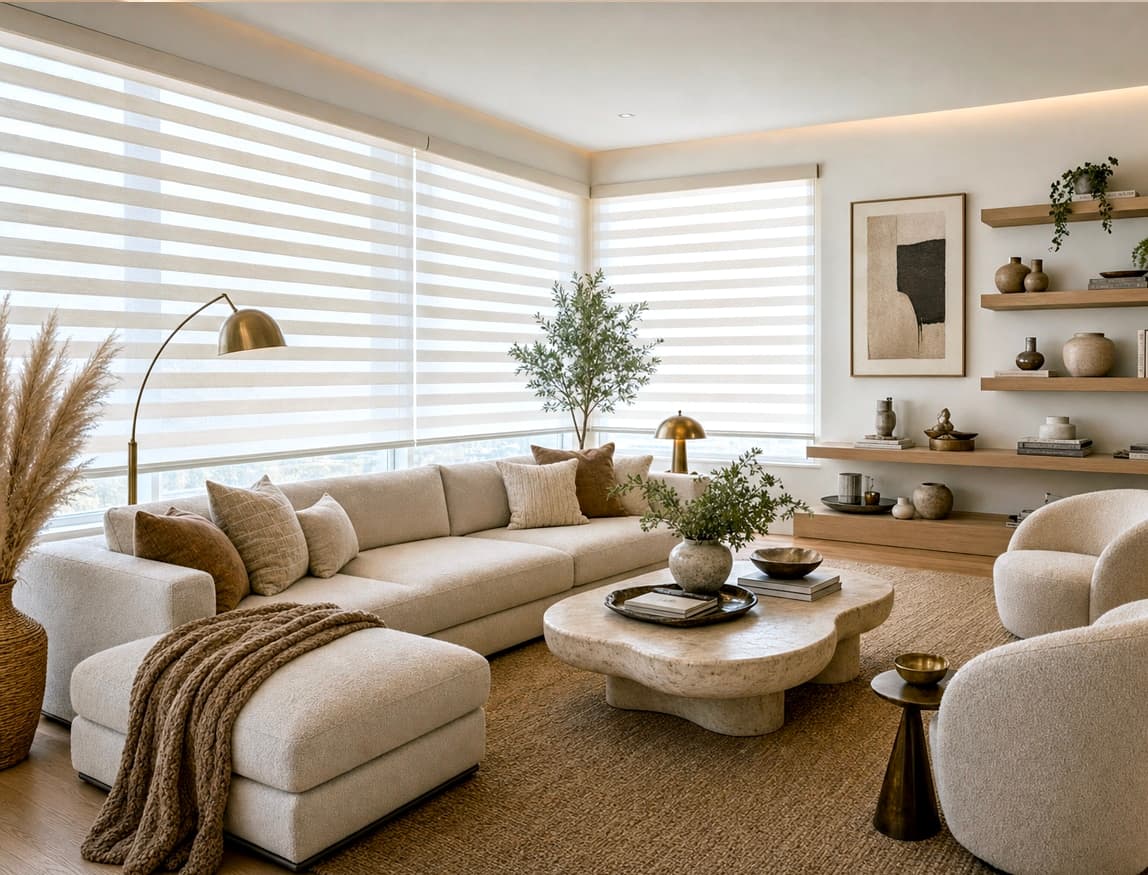
Layered constructions that shift between softened daylight, view, and greater privacy.
Understand the category
Sheer and layered shades use alternating fabrics, vanes, or bands to create more visual movement than a flat shade. They are especially appealing when a homeowner wants filtered light and a polished contemporary look without giving up adjustable control.
Choose sheer or layered shades over a standard roller shade when the ability to modulate filtered light and privacy while the treatment is lowered is especially valuable.
The practical strengths
Sheer layers can diffuse brightness and reduce the hard visual contrast of an uncovered window.
Vanes or alternating bands shift alignment to change privacy and view.
The layered construction gives the treatment dimension even when it is lowered.
Where it works well
These are useful starting points, not stock prescriptions. The room, glass, access, and daily routine determine the final recommendation.
Soft vanes or layered bands create a refined filtered-light effect where atmosphere matters as much as coverage.
Open alignment can preserve a connection outdoors while the sheer layer softens contrast and direct brightness.
The combination of horizontal rhythm and translucent fabric can feel lighter than blinds and more dimensional than a flat roller shade.
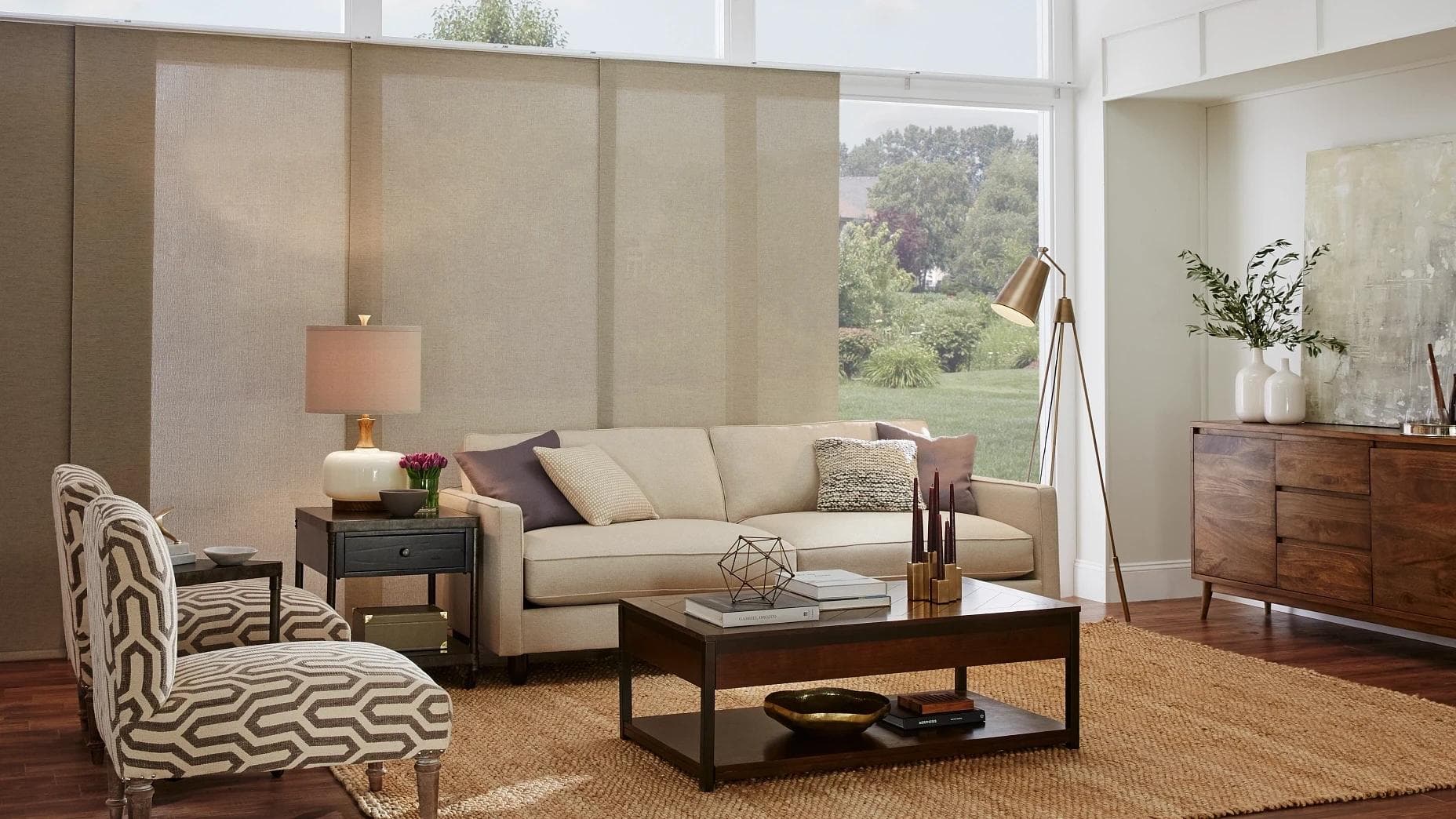
Some current systems suit broad openings, but fabric behavior, alignment, and control limits must be checked for the actual width.
Meaningful choices
Exact availability varies by manufacturer, collection, dimensions, and application. NBWC uses these decision areas to narrow the current, buildable choices.
Soft vanes rotate between sheer layers to move from an open view to more privacy, creating a fabric-based alternative to a blind.
Alternating translucent and opaque bands align or overlap as the shade moves, creating a graphic change in light and privacy.
Fabric collections vary in translucency. A darker option can improve coverage but should not be assumed to create a sealed blackout result.
The selected system may support cordless, wand-style, remote, or smart control. Availability depends on product, size, and current program.
How it works
Sheer facings, fabric vanes, or alternating bands move relative to one another, changing the balance between open view and greater coverage.
Manual and motorized concepts may be available, depending on the product and opening. Some designs combine lifting with vane or band alignment.
Light, privacy & comfort
These products are designed around filtered light and adjustable privacy. Exact nighttime privacy depends on the construction and selected fabric and must be evaluated product by product.
Vane scale, band size, texture, and color influence whether the shade feels quiet or graphic. Samples should be viewed against the actual window light.
Measured for the real opening
Precise width, level mounting, and coordinated alignment matter because repeating bands or vanes make inconsistencies easy to see.
Set the right expectations
The open position is designed for view and light, not complete privacy. Closing the vanes or bands improves coverage, but edge and fabric gaps remain.
Layered constructions are visually delicate. Placement, dust, pets, and frequent contact may influence whether another category is more practical.
The effect is soft, but the treatment operates as an engineered shade with a defined headrail, roll, or vane system.
Your consultation checklist
Questions homeowners ask
Sheer vane shades suspend soft fabric vanes between sheer layers. Zebra or banded shades use alternating horizontal bands that overlap as the shade moves. Both balance view and privacy differently.
Privacy improves when vanes or bands are closed, but the exact result depends on fabric, interior lighting, and viewing angle. Samples should be tested in the room.
More interior options
Made for your home
See materials in your own light, compare practical options, and get a recommendation built around the way you live.