Everyday ease
A well-planned control system makes frequent adjustments simpler and more consistent.
Comfort at a touch
Control options for frequently used, hard-to-reach, tall, or grouped window coverings.
Understand the category
Motorization is not one universal add-on. The right system depends on the selected treatment, opening, usage pattern, available power, desired controls, and current manufacturer support. NBWC helps make those decisions understandable and supports motorized products it sells.
Choose motorization when access, frequency of use, coordination, or ease justifies the added system planning. A well-designed manual product may remain the simpler answer elsewhere.
The practical strengths
A well-planned control system makes frequent adjustments simpler and more consistent.
Motorization can make tall or obstructed windows practical to operate.
Compatible products may be grouped or scheduled, depending on the selected system.
Where it works well
These are useful starting points, not stock prescriptions. The room, glass, access, and daily routine determine the final recommendation.
High, deep, or furniture-obstructed openings become useful when operation does not require physical access to the shade.
Several shades can be adjusted together for consistent light control, with grouping capabilities dependent on the selected system.
Supported schedules can move treatments at predictable times so frequently used rooms require less manual adjustment.
Powered operation can reduce reaching and lift effort where a manual control would be inconvenient or impractical.
Meaningful choices
Exact availability varies by manufacturer, collection, dimensions, and application. NBWC uses these decision areas to narrow the current, buildable choices.
These approaches avoid new in-wall wiring but require an accessible plan for charging or replacement over the life of the treatment.
Wiring can support a clean long-term installation, especially in construction or remodeling, but requires early coordination with qualified trades.
Compatible systems may use a small solar charging accessory where orientation, glass, and exposure support it. Availability and suitability must be verified.
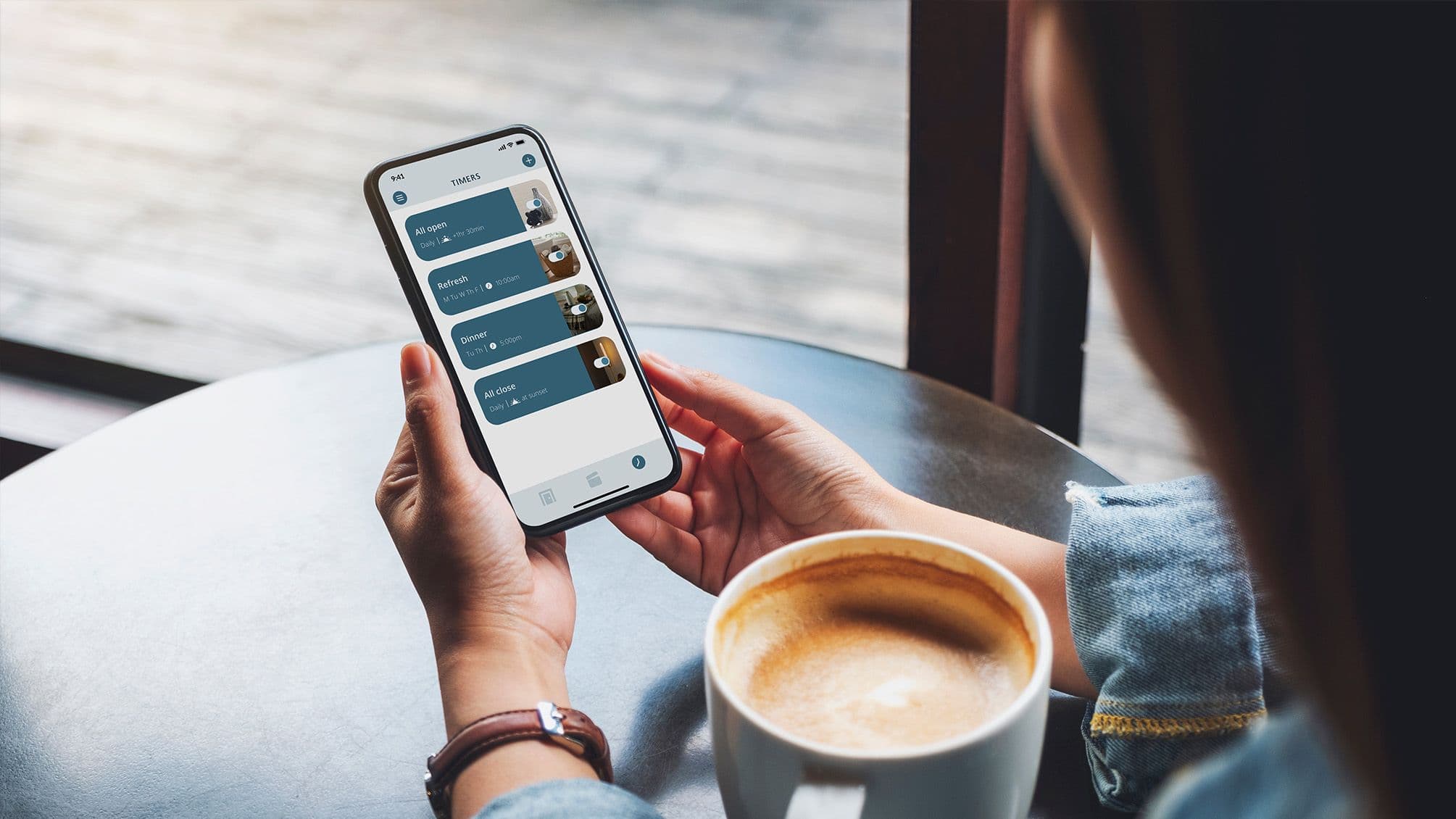
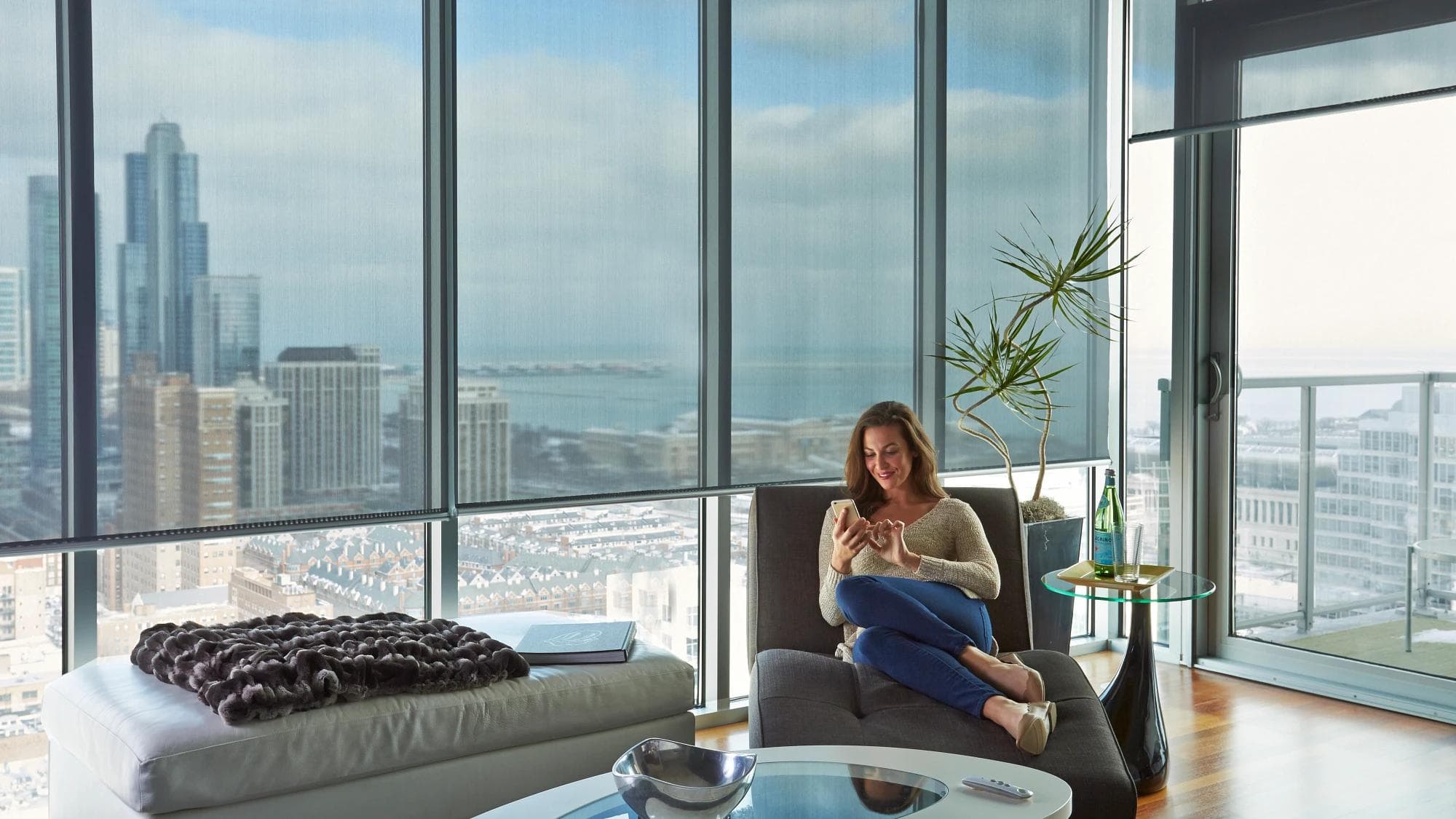
A simple remote may be all a room needs. Wall controls, mobile apps, scenes, and voice or smart-home connections add layers that should solve a real use case.
Treatments can often be organized by room or routine, but exact grouping, feedback, and scheduling behavior varies by platform.
How it works
A motor integrated with the selected treatment receives commands from supported controls. Power and communication methods vary by manufacturer and product.
Depending on the selected system, power may be battery, rechargeable, hardwired, or solar-supported. Controls may include remotes, wall controls, schedules, or compatible smart-home concepts.
Light, privacy & comfort
Convenient control can make it easier to adjust coverings as daylight and privacy needs change through the day; the fabric or product still determines the underlying performance.
Hardware visibility, charging access, wiring paths, control placement, and how multiple shades align should be considered before ordering.
Measured for the real opening
The installation plan must account for power, charging or service access, programming, grouping, limits, and a clear homeowner walkthrough.
Set the right expectations
A manufacturer may support different motors, controls, and integrations across product families. NBWC confirms the complete chain rather than promising a platform from a logo alone.
Charging ports, battery access, wiring junctions, and future troubleshooting should be planned before the treatment hides them.
The household should understand everyday controls and what happens if an app, network, or integration is unavailable.
Your consultation checklist
Questions homeowners ask
Not always. Depending on the product, options may include battery, rechargeable, hardwired, or solar-supported power. Size, frequency of use, access, and construction conditions guide the choice.
Possibly, but compatibility changes by manufacturer, motor, hub, platform, and software version. NBWC confirms the exact current combination before it becomes part of the proposal.
More interior options
Made for your home
See materials in your own light, compare practical options, and get a recommendation built around the way you live.