Visually simple
A flat fabric plane and compact roll keep the treatment clean and easy to coordinate.
Clean and adaptable
A simple rolling profile with a broad range of decorative, privacy, and room-darkening fabrics.
Understand the category
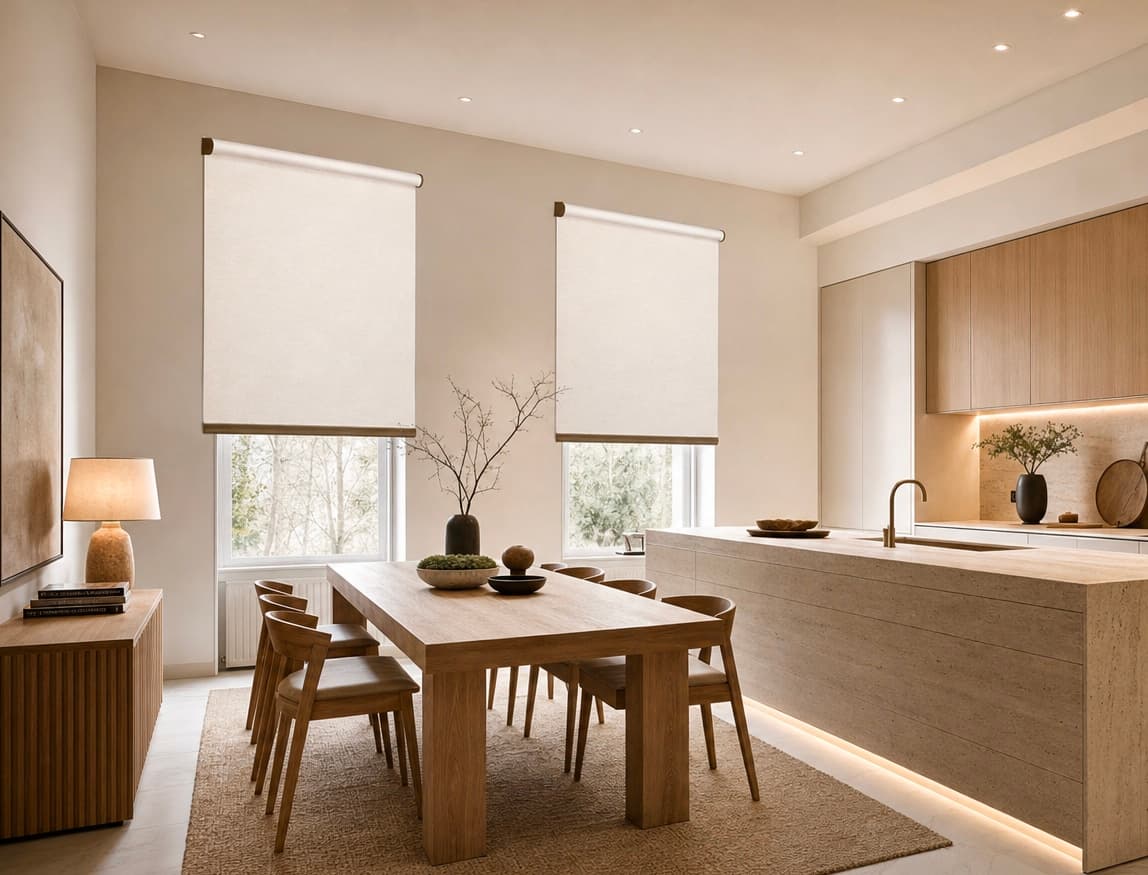
Roller shades place the emphasis on the fabric and the view. Their uncluttered profile suits contemporary spaces, but the breadth of textures, colors, opacities, and top treatments also lets them settle comfortably into transitional rooms.
Choose roller shades over cellular shades when a flatter fabric expression and minimal profile are more important than cellular structure or top-down operation.
The practical strengths
A flat fabric plane and compact roll keep the treatment clean and easy to coordinate.
Opacity, texture, pattern, and color can be selected around the room's actual light and privacy needs.
Many product lines support straightforward manual control or motorization, subject to the selected configuration.
Where it works well
These are useful starting points, not stock prescriptions. The room, glass, access, and daily routine determine the final recommendation.
A consistent roller profile can move through many rooms while fabric opacity and color change to suit each space.
Room-darkening fabrics, careful overlap, and optional channel systems can address spaces where strong light reduction matters.
Coupled or aligned shades may create cleaner sightlines, subject to product limits and the need for independent access or control.
A restrained roller shade can provide practical coverage behind side panels or other decorative treatments.
Meaningful choices
Exact availability varies by manufacturer, collection, dimensions, and application. NBWC uses these decision areas to narrow the current, buildable choices.
Texture and pattern affect the room; opacity determines what the shade does with daylight and privacy. Those are separate decisions and should be reviewed in the actual space.
Fabric can drop closer to the glass or roll away from it. The choice changes hardware clearance, side gaps, and how the roll reads from the room.
An exposed mechanism is minimal and direct. Fascias and cassettes conceal the roll and can coordinate with trim or hardware finishes.
Some systems pair two fabrics or coordinate adjacent shades. Window divisions, tube deflection, light gaps, and service access guide the layout.
Cordless and other manual controls suit accessible openings; motorization can simplify large, grouped, or frequently adjusted shades.
How it works
A continuous fabric panel rolls onto a tube at the head of the window. The roll direction, hem detail, hardware, and top treatment vary by product.
Manual and motorized choices are available depending on the product, size, and site conditions. Controls and power are specified as part of the complete system.
Light, privacy & comfort
The chosen fabric does most of the work: sheer and light-filtering materials preserve more daylight, while privacy and room-darkening fabrics provide greater coverage.
The shade can disappear into the architecture or introduce texture and color. Fascias, cassettes, exposed rolls, and coordinated hardware affect how finished the top of the treatment feels.
Measured for the real opening
Measurement determines fabric coverage, side gaps, roll placement, mounting surface, and alignment across groups of windows.
Set the right expectations
Brackets and controls create side gaps. Inside mounts should be evaluated for privacy and room-darkening expectations before ordering.
Tube size, fabric weight, width, alignment, and control method affect how a large shade hangs and operates.
A cassette can make the shade feel built in, while an exposed roll may suit a quieter architectural approach. Neither is universally better.
Your consultation checklist
Questions homeowners ask
The fabric blocks most transmitted light, while mounting and edge treatment manage light around it. The complete installation—not the fabric name alone—sets the expectation.
Sometimes. The product's width limits, tube and fabric behavior, window divisions, and desired control may instead favor multiple aligned or coupled shades.
More interior options
Made for your home
See materials in your own light, compare practical options, and get a recommendation built around the way you live.