Tailored fabric
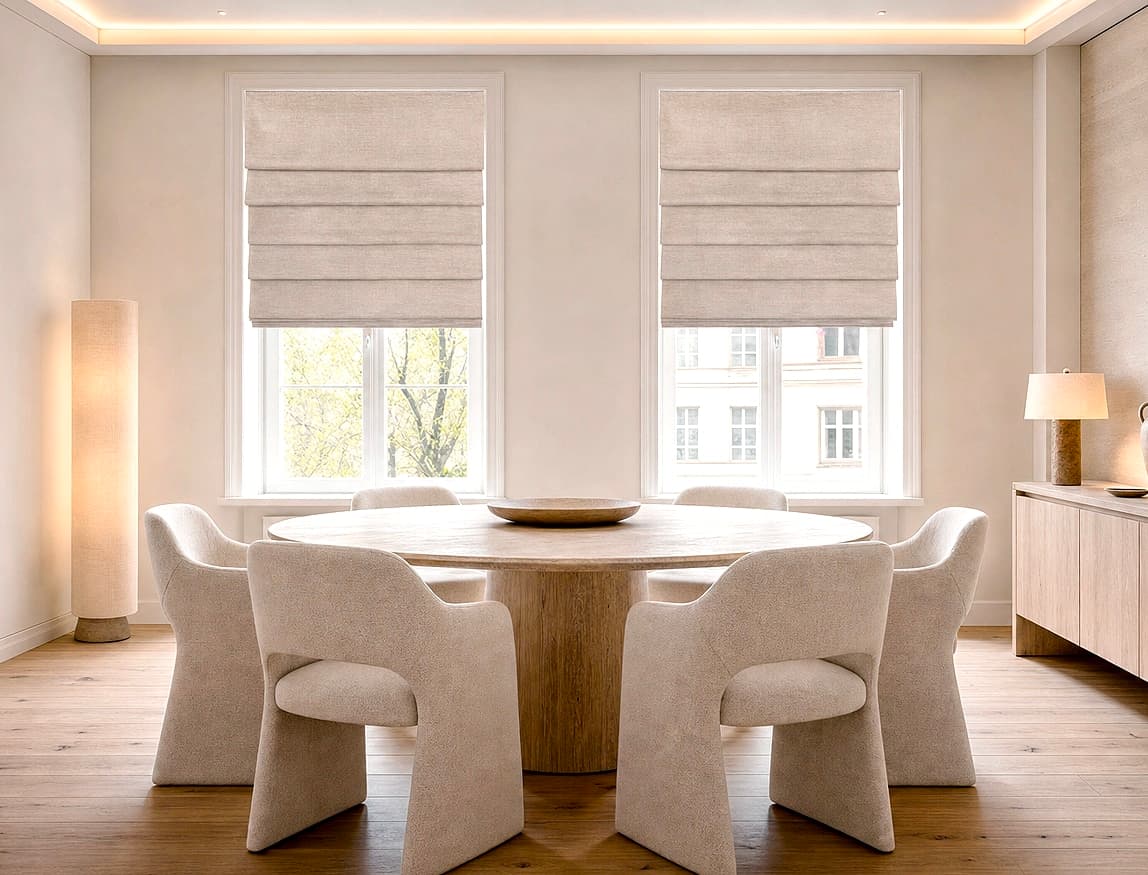
Structured folds give the window a softer architectural presence than a flat shade.
Tailored softness
Fabric shades that form composed folds for a softer, more furnished appearance at the window.
Understand the category
Roman shades combine the practical movement of a shade with the visual presence of fabric. Their folds, face fabric, lining, and top treatment can make a window feel tailored without the volume of full drapery.
Choose Roman shades over flat roller shades when fabric character and tailored folds are central to the room. Choose woven woods when natural fiber texture is the stronger priority.
The practical strengths
Structured folds give the window a softer architectural presence than a flat shade.
Fabric, fold style, lining, and trim choices can move from restrained to expressive.
Appropriate linings and configurations can address filtered light and privacy needs.
Where it works well
These are useful starting points, not stock prescriptions. The room, glass, access, and daily routine determine the final recommendation.
Tailored fabric and composed folds add softness where a flat roller shade would feel too spare.
A suitable lining can combine a furnished appearance with stronger privacy and light control.
Pattern, trim, and fold style can make the treatment a deliberate design element rather than background coverage.
Roman shades can sit inside a broader fabric plan with side panels, upholstery, and other textiles.
Meaningful choices
Exact availability varies by manufacturer, collection, dimensions, and application. NBWC uses these decision areas to narrow the current, buildable choices.
A flatter face keeps pattern and seams orderly and produces a restrained stack when raised.
Looped fabric creates more volume and movement, which suits rooms that benefit from a traditional or relaxed textile expression.
Weight, pattern repeat, drape, and texture all influence how the folds form. Not every decorative fabric performs equally well as an operating shade.
Translucent, privacy, and room-darkening liner concepts change light, street-side appearance, fabric body, and stack.
Where available, edge or ribbon banding can sharpen the outline or connect the shade to other finishes in the room.
Control availability depends on shade construction, fabric, dimensions, and the selected current product.
How it works
The fabric lifts into horizontal folds and lowers into a fuller panel. Fold structure and stacking behavior vary by style and fabric.
Control options depend on the selected product and construction. Motorization may be available on suitable systems and openings.
Light, privacy & comfort
Face fabric and lining work together to determine daylight, privacy, and how the shade looks from inside and outside.
Scale, pattern placement, seam strategy, fold style, lining, and decorative details should relate to the window proportions and surrounding furnishings.
Measured for the real opening
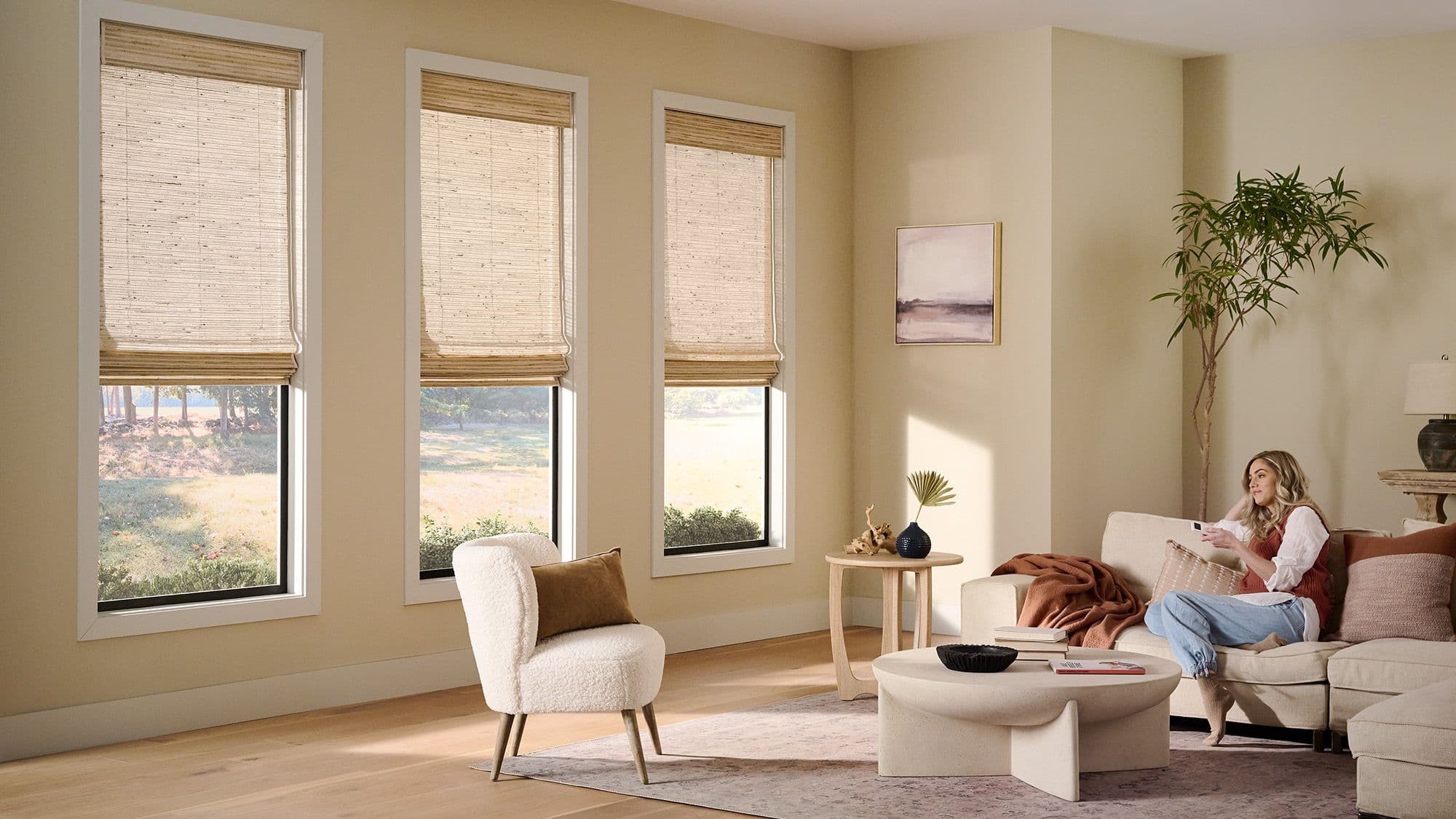
Careful measuring helps control stack position, symmetry, coverage, and the relationship between the shade and surrounding trim.
Set the right expectations
Roman shades are textile products: seams, pattern placement, fold memory, and natural movement are part of the result and should be planned honestly.
Raised folds remain visible. Mounting height and stack position determine how much glass is exposed and how tall the treatment feels.
It can affect color, fold body, weight, and the view from outside, so it should be evaluated with the face fabric rather than added as an afterthought.
Your consultation checklist
Questions homeowners ask
A Roman shade lifts into visible fabric folds and has a softer, more furnished character. A roller shade wraps onto a tube and usually reads as flatter and more minimal.
Some current constructions offer room-darkening liners, but edge gaps and the chosen fold style still affect the total result.
More interior options
Made for your home
See materials in your own light, compare practical options, and get a recommendation built around the way you live.